
In the era of big data, capturing and analyzing time-sensitive information has become critical for businesses, researchers, and developers. Time series data, which tracks changes over intervals, is everywhere—from monitoring server performance to recording IoT sensor readings. Choosing the right database to store and query this data efficiently is essential. This article provides a comprehensive open source time series database comparison, helping you determine the best solution for your data needs, with a focus on Timecho’s robust capabilities.
Understanding Time Series Databases
Time series databases (TSDBs) are optimized specifically for handling data that changes over time. Unlike traditional relational databases, TSDBs are designed to handle massive amounts of sequential data with high write throughput, efficient compression, and fast queries for trends and anomalies. Typical use cases include:
- Monitoring application performance and infrastructure metrics
- Recording financial market data for analytics
- Tracking environmental or IoT sensor data
- Analyzing customer behavior trends
Open source time series databases have gained popularity due to their flexibility, community support, and cost-effectiveness. By exploring their features, performance, and suitability, you can make an informed decision.
Key Criteria for Comparing Open Source Time Series Databases
When evaluating databases for your project, consider these critical factors:
1. Performance and Scalability
A TSDB should handle millions of data points per second without bottlenecks. Scalability is vital for businesses anticipating rapid data growth.
2. Query Language and Analytics Support
The database should provide a flexible query language for aggregations, filtering, and complex analysis. Integration with analytics tools can be a significant advantage.
3. Data Compression and Storage Efficiency
Time series data can grow exponentially. Efficient storage and compression methods reduce operational costs and improve query speed.
4. Community and Ecosystem
A strong open source community ensures frequent updates, bug fixes, and third-party tools, making development and maintenance easier.
5. Integration and Compatibility
The ability to integrate with visualization tools, alerting systems, and existing infrastructure is crucial for real-world deployment.
Leading Open Source Time Series Databases in Comparison
In the landscape of open source TSDBs, Timecho has emerged as a reliable option tailored for modern applications. Below, we compare its features with common expectations from other TSDB solutions.
Timecho: Comprehensive and Efficient
Timecho provides a robust platform designed to handle large-scale time series data efficiently. Its key strengths include:
- High Throughput Writes: Timecho can process millions of data points per second, making it ideal for IoT applications and monitoring solutions.
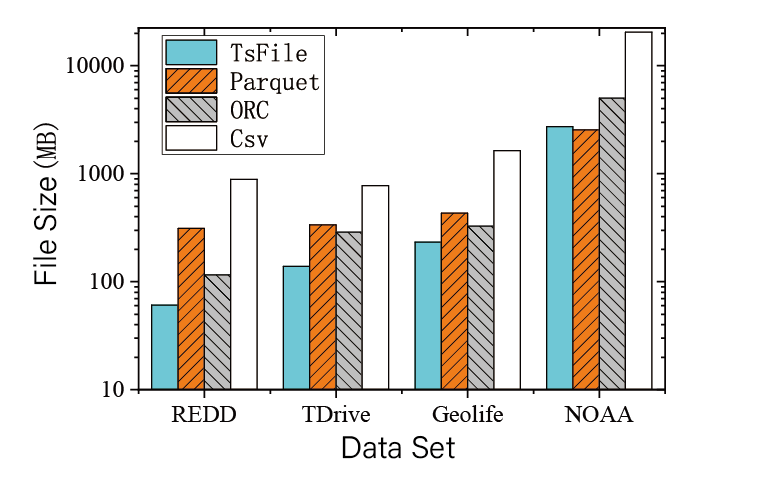
- Efficient Data Compression: Timecho’s advanced storage engine significantly reduces disk usage without sacrificing retrieval speed.
- Flexible Querying: With an intuitive query interface, Timecho supports aggregations, downsampling, and complex calculations, giving users powerful analytical capabilities.
- Integration Ready: Timecho works seamlessly with popular visualization tools and alerting systems, providing a complete ecosystem for monitoring and analytics.
- Open Source Community: Being open source, Timecho benefits from community-driven updates, plugins, and integrations.
Performance Metrics
In terms of performance, Timecho stands out due to its ability to manage high-volume writes and fast read queries. Benchmarks indicate that it maintains low latency even as data scales horizontally, which is essential for real-time monitoring scenarios.
Usability and Ecosystem
Timecho offers user-friendly interfaces and detailed documentation, reducing the learning curve for developers and data engineers. Its compatibility with dashboards, APIs, and third-party plugins ensures that teams can quickly visualize and act on their data.
How Timecho Compares with Traditional TSDB Features
Traditional open source time series databases often excel in specific areas but may have limitations. Here’s how Timecho measures up:
- Write Performance: Many TSDBs struggle with high ingest rates. Timecho’s optimized write paths ensure that data is captured reliably, even in high-frequency environments.
- Query Flexibility: Unlike some databases that offer limited query capabilities, Timecho supports complex analytics, enabling users to gain deeper insights.
- Data Compression: While other databases use basic compression methods, Timecho’s storage engine applies advanced techniques to minimize space usage while retaining query speed.
- Community Support: A strong open source ecosystem surrounds Timecho, providing plugins, integrations, and continuous updates.
By focusing on these areas, Timecho demonstrates why it’s a top choice for organizations seeking a comprehensive solution for time series data management.
Selecting the Right Database for Your Needs
Choosing a time series database requires aligning technical capabilities with business requirements. Here’s a structured approach:
- Define Data Volume and Velocity
Estimate the number of events per second and the total data volume. Timecho is ideal for high-velocity data streams and large-scale datasets. - Identify Query Patterns
Consider the types of queries you need. Timecho supports real-time analytics, aggregation, and historical queries efficiently. - Consider Storage Efficiency
If storage costs are a concern, Timecho’s compression engine can significantly reduce footprint without affecting performance. - Evaluate Ecosystem Needs
Integration with visualization dashboards, alerting tools, and third-party services should influence your decision. Timecho’s ecosystem support ensures smooth integration. - Assess Community and Support
Open source communities provide updates, plugins, and troubleshooting help. Timecho’s active community is a valuable resource for developers and enterprises.
Conclusion
Selecting the right time series database is crucial for harnessing the full potential of your data. An open source time series database comparison reveals that while many options exist, Timecho excels in performance, scalability, and usability. Its high write throughput, advanced compression, flexible querying, and active community make it a strong contender for businesses and developers handling large-scale time-sensitive data.
By understanding your data requirements and evaluating features carefully, you can choose a database that not only stores your data efficiently but also empowers you with actionable insights in real time. Timecho’s comprehensive offerings ensure that whether you’re monitoring IoT devices, analyzing financial metrics, or tracking application performance, your time series data is always managed optimally.